

.png)

Parents could be excluded from children's lives more easily by family courts as David Lammy plan to scrap some jury trials presses on
Mar 7
4 min read
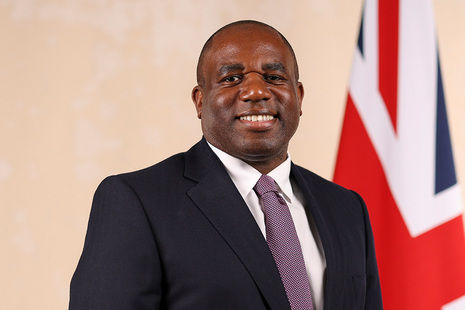
PARENTS could be excluded from their children's lives more easily by courts following sweeping new changes to abolish the presumption of parental involvement in the new Courts and Tribunal Bill.
The legislation is described by the Labour Government as a landmark piece of legislation to fix the justice system after years of neglect.
It says the changes to Family Courts will mean children will be better protected from abusive parents.
The presumption of parental involvement was introduced into the Children Act 1989 to help ensure children could maintain a relationship with both parents after separation.
However, the Ministry of Justice (MoJ) said evidence shows that the current process can leave children at risk of harm.
While the current law contains safeguards that allow involvement to be restricted where it harms a child’s welfare, repealing this provision and legislating through the Courts and Tribunal Bill sends a clear message that the Government is putting children’s welfare and safety first, an MoJ spokesperson said.
The spokdesperson said: "The change means the courts will no longer start from an assumption that parental involvement is always in a child’s best interest, and instead adopt an open-minded inquiry into what is in a child’s best interests. If parents are a threat to their child’s safety, they should expect to have their involvement restricted, for example through courts ordering supervised contact, involvement limited to written communication, or by ordering that there should be no involvement at all."
The repeal will now go through Parliament and will be removed from the Children Act 1989.
The measure was campaigned for by Claire Throssell MBE in memory of her two sons, Jack, 12, and Paul, 9, who were both killed by their father, despite her warnings that he was a danger to them.
Deputy Prime Minister David Lammy said: “Every child deserves to be safe, every victim deserves to be heard, and every family deserves a justice system they can trust. We need to make sure that what happened to Claire and her children never happens again.
“This Government’s priority is to bring our justice system back from the brink. That means making sure the safety and welfare of children remains at the heart of every decision, and that’s why we are repealing the presumption of parental involvement through the Courts and Tribunal Bill.
“This is a landmark moment that I want to dedicate to the remarkable Claire Throssell, and to the memory of her two children, Jack and Paul. Her selfless campaign is helping us rebuild a justice system that is fair, compassionate, and with children’s safety at its heart.”
Ms Throssell, now a Women’s Aid Ambassador, said: “For a decade, I have been campaigning with Women’s Aid to change the family courts system to make sure that no child is ever again placed at risk of further harm from abusive parents.
“Seeing that the presumption of parental contact will finally be repealed, and in the memory of my sons, Jack and Paul, is deeply meaningful. No child should have to hold out a hand for help in darkness, saying that they were hurt by someone who was meant to protect them. No parents should have to hold their children as they die, from the abuse of a perpetrator, as I did eleven years ago.”
Farah Nazeer, Chief Executive of Women’s Aid, said: “We are delighted to see the Courts and Tribunals Bill includes plans to repeal the presumption of parental involvement from the Children Act. Over 20 years ago, we published our first report on child homicides as a result of unsafe contact, with each death being entirely preventable. Finally, we have been heard and these children have been recognised. The repeal of the presumption is a historic campaign win for Women’s Aid, our sector partners, the survivors we work with and of course our ambassador, Claire.
“Claire’s two sons, Jack and Paul, were murdered by their abusive father as a direct result of unsafe contact, which had been authorised by the family court, despite the pleas from Claire and her children. To have this change in their memory is deeply meaningful. Once this law is passed, we are hopeful that children’s safety and wellbeing will be at the heart of family courts, with the system now protecting them, instead of being used as a weapon by abusers.”
Today’s measures come as the Courts and Tribunal Bill is set to reach Second Reading in the House of Commons on Tuesday 10 March.
Other scheduled reforms are the Government's controversial axing of jury trials for cases where a convuction would lead to three years in prsion or less.
New ‘Swift Courts’ would see such cases heard by a Judge alone, estimated to take 20 percent less time than a jury trial.
Also Judge-only trials for particularly technical and lengthy fraud and financial offences freeing up jurors who have to give up months of their lives to hear particularly burdensome cases.
There will be guaranteed jury trials for the most serious and almost all indictable offences – including rape, murder, aggravated burglary, blackmail, people trafficking, grievous bodily harm and the most serious drug offences.
Magistrates, who can cureently only jail for up to 12 months for an either way offence, the power to hand down sentences of up to 18 months or potentially two years, so they can hear more cases, freeing up Crown Court time.
Alongside record investment in the Crown Court so judges can hear as many cases as possible next year, the Deputy Prime Minister also announced plans for a new AI courts assistant and National Listing Framework to standardise listing and limit unnecessary delays for victims, and specialist "Blitz" courts surge to tackle backlog of assault against emergency workers.