

.png)

Key select committee MPs turn spotlight back on CPS Director of Public Prosecutions over reason it dropped case against men accused of spying for China in Parliament
Oct 16, 2025
4 min read
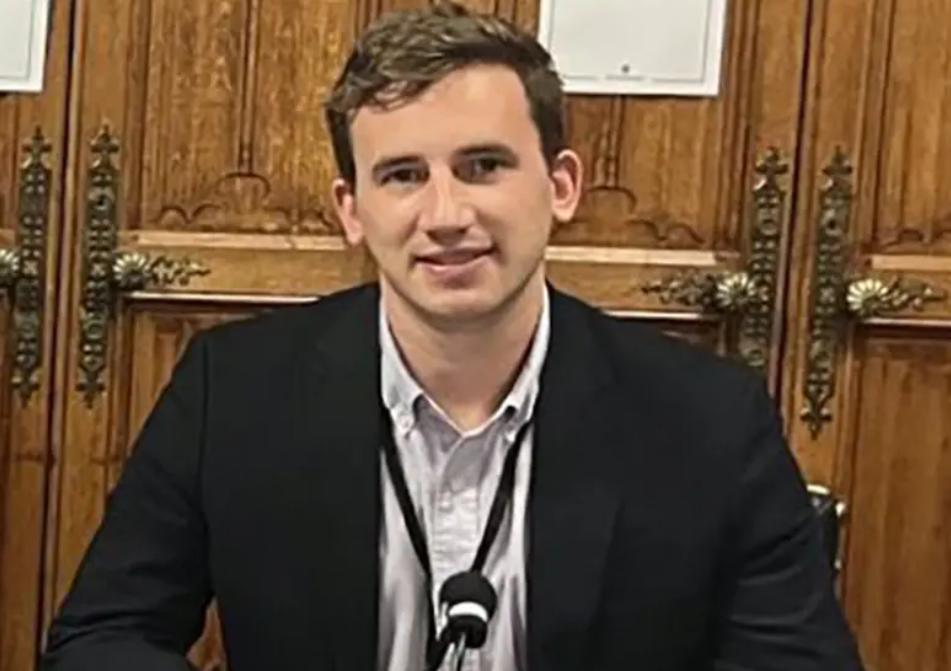
MPs on four key Parliamentary select committees and Justice have again turned the spotlight onto the CPS as they seek answers over why it suddenly dropped the prosecution of two men accused of spying on behalf of China in parliament.
Originally the respective chairs of the Home Affairs and Justice committees Dame Karen Bradley and Andy Slaughter called in a letter published on September 30 2025, for the Crown Prosecution Service to provide “a clear explanation” about why it dropped the case against Christopher Cash, 30, (above) and Christopher Berry, 33.
The pair, from Whitechapel in east London and Witney in Oxfordshire respectively, had been due to go on trial in October charged with breaching the Official Secrets Act 1911.
They were charged in April last year with “providing prejudicial information to a foreign state, China”.
Both had denied the allegations after being arrested in 2023.
Mr Cash was previously director of the China Research Group, a Conservative campaign group on China-UK relations.
The joint letter said: "We are writing on behalf of our respective committees to seek further information about the reasons for the recent decision of the Crown Prosecution Service to drop charges against two individuals for espionage offences under the Official Secrets Act 1911.
As you know, it is normal practice for the CPS to provide a reason for any decision not to proceed with charges, both in fairness to the victims and in the interests of transparency. The explanation provided by the CPS so far in this case, that the “evidential standard for the offence indicted is no longer met”, falls some way short of the level of detail that is acceptable for a case of this seriousness and one that has a bearing on the ability of parliamentarians to perform their duties.
"It is the role of our committees to scrutinise the effectiveness of the criminal justice system and to hold to account those responsible for any serious failings. A clear explanation for the dropping of charges in this case is required in order to inform an assessment of whether there have been any such failings. It is in our shared interest to provide reassurance to parliamentarians and the public that the necessary protections against foreign interference in our democracy are in place and fully functional.
"To this end, we ask for an explanation behind the changes in the standard or availability of evidence which led to your decision, including your own assessment as to where responsibility for such changes lies. If it is not possible to provide such an explanation in public, we would be prepared to consider a private meeting before considering whether further action is warranted."
The CPS was asked to respond by October 8 with the reply published.
It was in this reply that Stephen Parkinson, Director of Public Prosecutions, for the CPS, first blamed Keir Starmer's Government for the collapse.
He wrote: "It is the legal responsibility of the CPS to independently assess the evidence in every case. That responsibility is an ongoing obligation throughout the life of a case. I am satisfied that the decision to charge this case in April 2024 was correct. This was on the basis of where the law stood at that time in relation to the requirements of the Official Secrets Act 1911. Some weeks later, a High Court decision (R v Roussev and others 2024) ruled that “enemy” for the purposes of the 1911 Act includes a country which represents at the time of the offence, a threat to the national security of the UK.
In the light of this new judgment, it was considered that further evidence should be obtained. Efforts to obtain that evidence were made over many months, but notwithstanding the fact that further witness statements were provided, none of these stated that at the time of the offence China represented a threat to national security, and by late August 2025 it was realised that this evidence would not be forthcoming. When this became apparent, the case could not proceed. This was a professional assessment made by CPS lawyers
experienced in prosecuting national security and espionage cases, applying the Code for Crown Prosecutors."
Following his reply Mr Parkinson met in private with members of the two committees and those from the Foreign Affairs Committee and the Joint Committee on the National Security Strategy for further information.
Today, October 16 2025, they wrote back to him asking for further information.
Their reply appears to question the explanation given that the CPS categorically required evidence from the Government to show China was considered an enemy state at the time of the alleged offences.
It said: "In view of the seriousness of the allegations, the implications for UK national security and foreign policy, and the need to support the integrity and independence of the criminal justice system, we believe that it is in the public interest for a fuller explanation for the dropping of charges to be provided. We have a number of further questions."
They have asked for a response from him by October 24, but it did not say it would be published this time.
Conservative MP Neil O’Brien, who co-founded the CRG, told parliament earlier this month he had been “spied upon” and that he found it “astonishing” that the case had been dropped and that MPs “were not being told why”.
Mr Cash said after the case was dropped that he was “relieved that justice has been served”.
In a letter to Chris Philp, Tory shadow home secretary, after the CPS dropped the case, Director of Public Prosecutions, Stephen Parkinson, said the independence of his team was “completely respected within Whitehall and government” and gave his “own assurance” that there had been no outside pressure to drop the case.