

.png)

END OF THE NCA? Biggest shake up of law enforcement will see new National Police Service to absorb counter terror, NCA and regional organised crime units
Jan 24
5 min read

A NATIONAL Police Service is to be created, to deal with the most complex and serious crimes and terrorism, in one of the biggest shake ups of policing ever.
The changes, to be announced by Home Secretary Shabana Mahmood (below) could signal the end of the National Crime Agency (NCA), which will be absorbed into the new service.
The service will also bring the capabilities of Counter Terrorism Policing (CTP), Regional Organised Crime Units, the National Air Police Service (NAPS) and National Road Policing under a single organisation.
A Home Office spokesperson said: "For too long, local police forces have been burdened by national policing responsibilities, diverting time and resources away from fighting everyday offences – like shoplifting, drug dealing, phone theft, and anti-social behaviour.
"They are also unequipped to fight the most complex and serious crimes such as terrorism, fraud and organised crime that are not constrained by force or even national boundaries.
"The new National Police Service will attract world-class talent and use state of the art technology to fight complex and serious crimes, lifting the burden on overstretched local forces and allowing them to focus on catching local criminals.
"As one force, it will be better equipped to share technology, intelligence and resources to stop the growing threat from crime that has become increasingly complex, digital, online and with no respect for constabulary borders."
A National Police Commissioner will be appointed to lead the force and will serve as the most senior police officer in the country.
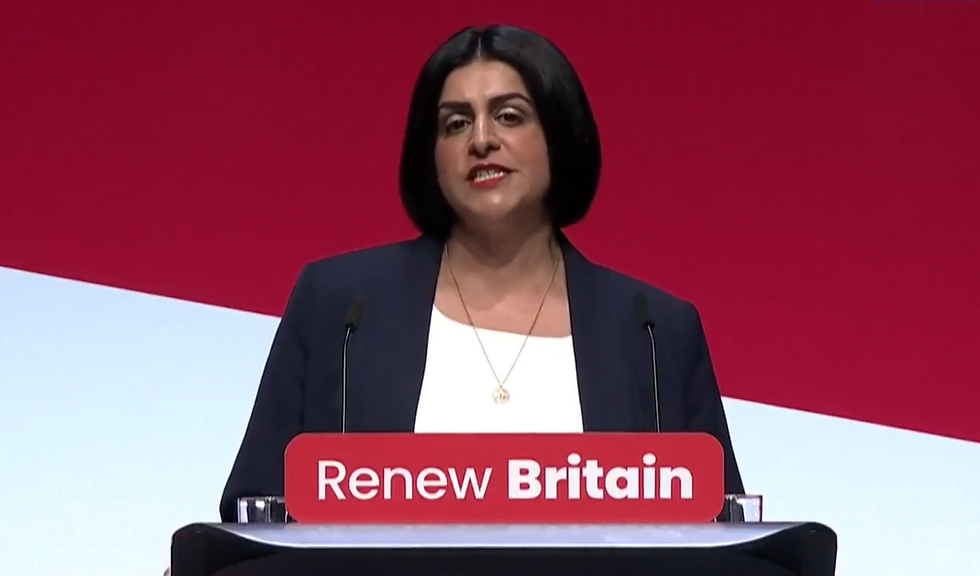
Ms Mahmood, said: “The current policing model was built for a different century.
“Some local forces lack the skills or resources they need to fight complex modern crime such as fraud, online child abuse or organised criminal gangs.
“We will create a new National Police Service – dubbed “the British FBI” - deploying world class talent and state of the art technology to track down and catch dangerous criminals.
“In doing so, local forces will be able to spend more time fighting crime in their communities.”
The spokesperson added: "The reforms will make sure policing remains a local public service, against a backdrop of increasingly complex, serious crime. The creation of the National Police Service will enable local forces to spend more time fighting crime in their local communities.
"This will build on the significant progress that has already been made under the Government’s Neighbourhood Policing Guarantee, with almost 2,400 additional officers brought into neighbourhood police roles as part of a commitment to put 3,000 into frontline positions by the end of March and 13,000 by the end of the Parliament.
"National resources are scattered around the country. The Metropolitan Police is responsible for counter-terrorism policing, West Yorkshire Police for police helicopters and Sussex Police for National Roads Policing. These responsibilities will all be folded in the National Police Service.
"The new National Police Service will also make sure the public receive the same service from the police, no matter where they live.
"Firstly, it will take over the role of setting professional standards and training requirements for policing, making sure every officer in the country is subject to the same high standards the public expect.
"This new force will also make sure every force has access to the best possible technology, purchasing new tech and equipment on behalf of all forces. This will include technology such as facial recognition – which has allowed the Metropolitan Police to make over 1,700 arrests in two years.
"The NPS will enable new innovations and best practice to be rolled out faster right across the forces."
On Monday the Home Secretary is expected to announce the largest reforms to policing since the police service was founded 200 years ago.

In a white paper titled “From local to national: a new model for policing”, Mahmood is expected to outline a radical blueprint for reform, so local forces protect their community, and national policing protects us all. Underpinning the reforms are simple aims to catch criminals, cut crime, and protect the public.
The formation of the NPS will be implemented in phases, working with the NCA, CTP and ROCUs to agree when this transition of major capabilities can take place.
The NPS will bring together bring together crucial support services that local police forces can draw upon, to raise standards, and improve efficiency. As a starting point, it will take on responsibility for existing shared services, national IT capabilities, force hosted national capabilities such as the National Police Air Service before building out its provision of crucial national operational support services for policing.
Neil Basu QPM, (above) former head of Counter Terrorism Policing said: “A national police service will bring long-needed integration of multiple agencies, processes, systems and decision making bodies and be far more capable as one national security system dealing more effectively with major crime, organised crime and terrorism in all its forms.
"The road to such a fundamental change is clearly a long one with many obstacles but it is brilliant to see a Home Office and Home Secretary willing to get back in the driver's seat and think long term and in the best interests of a safer UK. The prime responsibility of a government should be the safety and security of its citizens and that starts with the safety and security of the streets where you live and work.”

The NCA had previously been dubbed Britain's FBI by the media but was low on resources.
NCA officers are also civil servents and not police officers, with less transparency around their disciplinary hearings.
The NCA is also immune from the Freedom of Information Act, making it hugely unaccountable to the public.
NCA Director General Graeme Biggar (above) said: “I am proud of the brilliant work NCA officers do to protect the public from serious and organised crime and new and emerging threats.
"But the overall policing system is out of date. Crime has changed, technology has changed, and how we respond needs to change.
"As part of reform, we need a single, stronger national law enforcement body, building on the NCA and others, to more coherently tackle organised crime, fraud, terrorism and the new international and online threats we face.
"These are threats that affect us all locally, but need a national and international response.
"Such a body would enable us to improve how we protect the public, our communities and the country.
"We look forward to publication of the Government’s White Paper.”
Counter Terrorism Policing, the Metropolitan Police and National Police Chiefs' Council issued a joint statement in response to the creation of a National Police Service.
It said: "Our organisations operate in an environment where crime is becoming increasingly complex, digitally enabled and dangerous. Terrorism, hostile state activity and organised criminal networks are now more interconnected than ever, demanding a policing model that is agile, capable and resilient.
"Modern crime requires a modern policing response. We support and have been calling for this ambitious step to bring together some of the most capable policing teams in the country into a single National Police Service. This builds on the high international regard that already exists amongst partners for Counter Terrorism Policing, whose capabilities and professionalism are recognised globally.
"This transformation, however, must be delivered with care. Its success depends on maintaining strong connections with local policing and the communities we serve.
"Neighbourhood officers remain indispensable in disrupting organised crime and countering terrorism. Their relationships, insights and presence on the ground are foundational to public safety.
"As we implement this reform programme, protecting those vital local links will be essential to ensuring the new National Police Service strengthens - not separates - the bond between policing and the public."